Better together: healthcare leaders unite to advance quality use of medicine
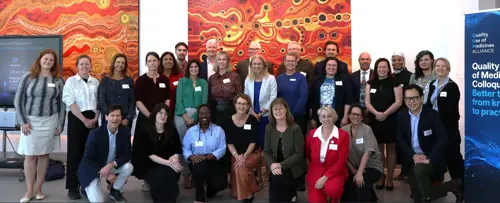
Healthcare leaders, researchers, policymakers, and consumer representatives gathered in Canberra yesterday for the Quality Use of Medicines (QUM) Colloquium, reflecting on progress in improving medicine and diagnostic use across Australia.
Under the theme "Better together: From knowledge to practice", the event combined two complementary programs: working in partnership for quality use of medicines in the morning and knowledge translation for better care in the afternoon.
Together, the sessions provided an opportunity to reflect on the first three years of the QUM Alliance, share insights from initiatives across the healthcare system and consider how partnerships, innovation and emerging technologies can deliver more meaningful and sustainable improvements in healthcare practice.
“Improving the quality use of medicines requires collaboration across the health system. Opportunities to bring together consumers, clinicians, researchers and policymakers can help us share knowledge, learn from different perspectives and contribute to better health outcomes for Australians,” Daniel McCabe, First Assistant Secretary, Department of Health, Disability and Ageing, said.
Working in partnership to support QUM
The morning session examined the impact of collaborative approaches, highlighting the necessity of combining clinician expertise with the lived experiences of consumers. Representatives from Alliance member organisations outlined how this work, funded by the Australian Government through the Quality Use of Diagnostics, Therapeutics and Pathology (QUDTP) program, has supported them in providing quality education and resources focused on improving medicines use and to advance QUM across the sector.
Reflecting on the importance of collaboration, Darlene Cox, QUM Consumer Lead, of Health Care Consumers Association of the ACT noted:
"Improving the quality use of medicines is not something any one organisation or profession can achieve alone. It requires genuine partnerships and a commitment to listening to consumers, understanding their experiences and ensuring that the work we do translates into better care."
Discussions emphasised that while significant progress has been made through strengthened consumer health literacy and accessible medicines information, improving QUM requires sustained collaboration and a sharp focus on real-world impact.
The future of knowledge translation
The afternoon program shifted toward addressing persistent challenges through innovative approaches, partnerships, and emerging technologies. Through facilitated workshops, participants explored practical solutions for how clinical evidence is accessed and applied, considering the role of artificial intelligence in supporting clinical decision-making.
Dr Stephen Barnett, CEO of Medcast, highlighted the gap between available evidence and everyday practice:
"We have an enormous amount of clinical knowledge and evidence available, but ensuring that knowledge reaches the right person, at the right time, and translates into better care remains a significant challenge."
While technologies like AI offer exciting possibilities, participants stressed the continued importance of clinical expertise, consumer involvement, and robust governance. As Dr Barnett concluded, lasting improvements come from combining these elements in ways that genuinely support better outcomes.
Building on a shared commitment to better care
The Colloquium concluded by bringing together insights from across the day, reinforcing the importance of continued collaboration and identifying opportunities to build on existing initiatives through future partnerships.
The event highlighted the value of connecting research, policy, clinical practice and consumer experience, while exploring how new ideas and technologies can help accelerate progress.
As the QUM Alliance looks ahead, the discussions reinforced a shared ambition: to ensure that Australia's investment in research, clinical evidence and innovation translates into tangible improvements in the quality use of medicines and diagnostics, and ultimately better outcomes for patients and communities.
Event details:
Event: Quality Use of Medicines Alliance Colloquium
Date: Wednesday, 4 November 2026
Location: Ann Harding Conference Centre, University of Canberra
Media Enquiries:
Medcast
Contact: Susann Clifton-Smith
Email: Susann.cliftonsmith@medcast.com.au
Health Care Consumers’ Association
Contact: Darlene Cox
Ph: (02) 6230 7800
About the Quality Use of Medicines Alliance
The Quality Use of Medicines Alliance brings together organisations and expertise from across Australia's healthcare sector to support the safe, effective and appropriate use of medicines and diagnostics. The Alliance is supported by funding from the Australian Government through the Quality Use of Diagnostics, Therapeutics and Pathology Program.
About Medcast
Medcast is an independent Australian healthcare education and clinical technology organisation, supporting health professionals with evidence-based education, continuing professional development and access to trusted clinical knowledge. Medcast is committed to helping healthcare professionals translate evidence into better decisions and better patient care.

Become a member and get unlimited access to 100s of hours of premium education.
Learn moreClinicians can now access trusted, Australian-sourced, clinically validated medical knowledge at the point of care, with automatic CPD capture built into their workflow.
Dr Rebecca Chan

As more Australians live longer with and after a cancer diagnosis, GPs play an increasingly important role in survivorship care. The new GP Cancer Care Hub brings together practical, evidence-based education and resources to help GPs support patients living with and beyond cancer in everyday general practice.
Medcast

Best Practice Software (Best Practice) and Medcast today announced a major step forward in their long-standing collaboration, supported by a lead investment from Best Practice as part of Medcast’s $5.4 million capital raise.